Omega-3 appears on everything from fish oil bottles to cat food and functional treats. But “contains omega-3” tells you only part of the story.
To understand omega-3 cat treats, it helps to know which omega-3 fatty acids matter, how they work in the body and why the amount of fish oil is not necessarily the same as the amount of EPA and DHA.
What Is Omega-3?
Omega-3 refers to a family of polyunsaturated fatty acids rather than a single nutrient.
| Omega-3 | Common Source | Why It Matters |
|---|---|---|
| ALA | Plant oils and seeds | Short-chain omega-3 precursor |
| EPA | Marine oils | Involved in inflammatory signaling pathways |
| DHA | Marine oils | Important structural fatty acid in cell membranes |
How Do EPA and DHA Work?
Dietary fatty acids become incorporated into tissues and cell membranes. Changing the balance of omega-3 and omega-6 fatty acids can influence the production of signaling compounds involved in inflammatory processes.[1]
That is why EPA and DHA have been studied across several areas of companion-animal nutrition. However, the evidence varies by condition, and a nutritional ingredient should not automatically be interpreted as a treatment.
What Are Omega-3s Good for in Cats?

Inflammatory Response
Controlled research has demonstrated that dietary fish oil can alter inflammatory and immune responses in cats.[2]
Mobility
In cats with naturally occurring osteoarthritis, long-chain omega-3 supplementation has been associated with changes in some owner-observed activity and mobility measurements.[3]
Skin and Coat Nutrition
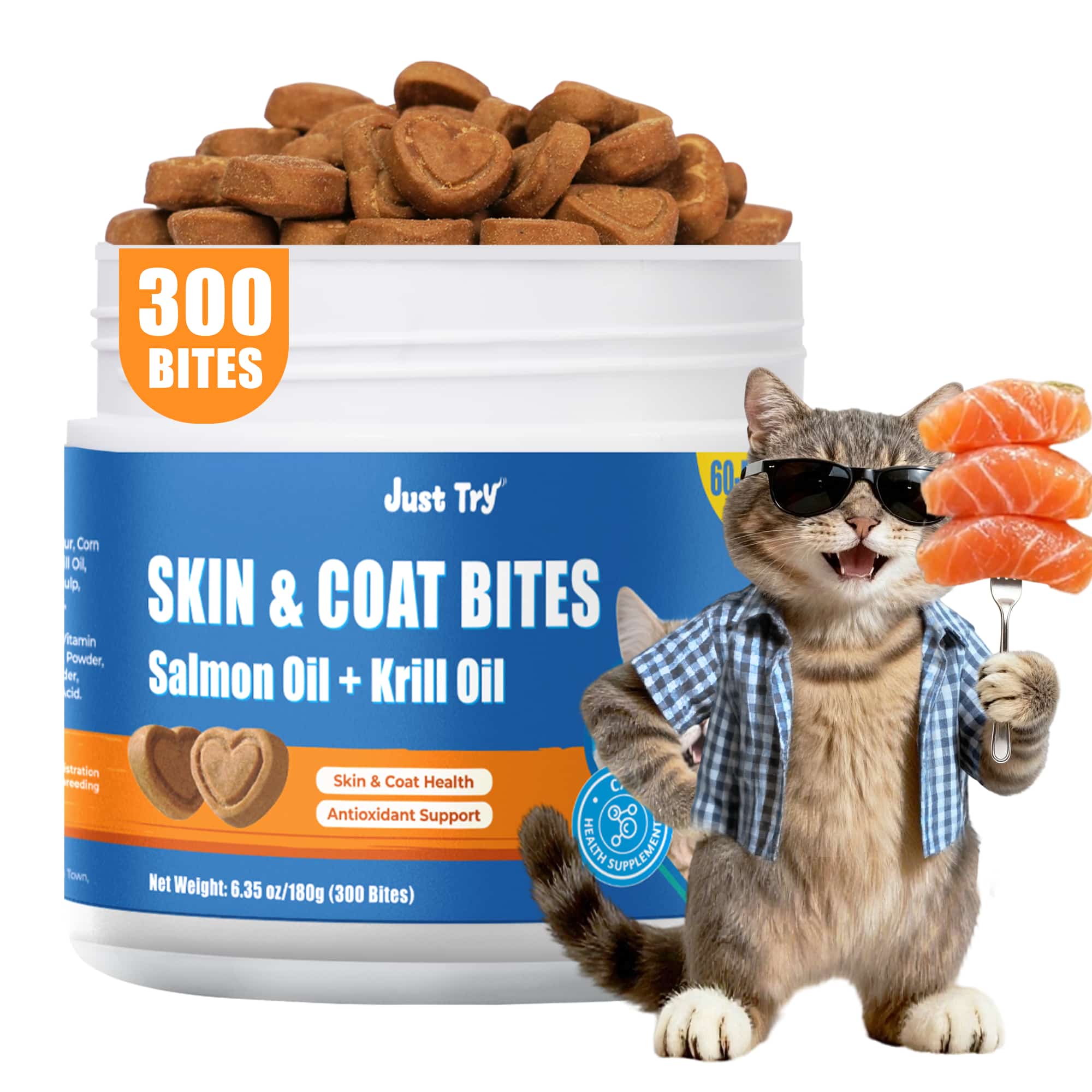
Fatty acids are structural components of the skin and coat, making dietary fat quality relevant to normal skin-barrier and coat maintenance. Omega-3 ingredients are therefore commonly combined with nutrients such as zinc, biotin and vitamin E in skin-and-coat formulas.
Omega-3 Treats vs Fish Oil
| Feature | Omega-3 Treat | Liquid Fish Oil |
|---|---|---|
| Ease of use | Very convenient | Requires measuring |
| Additional nutrients | Often contains vitamins, minerals or amino acids | Usually more focused on oil |
| Fatty-acid concentration | Often lower or not separately quantified | Often clearly lists EPA/DHA |
| Use case | Daily complementary nutrition | More targeted omega-3 supplementation |
Fish Oil mg vs EPA + DHA mg
If you remember only one label-reading rule, make it this:
Fish oil contains EPA and DHA, but it also contains other fats. A supplement listing “60 mg fish oil” therefore does not mean that it contains 60 mg EPA + DHA unless the label specifically states that.
A Real Example: Multivitamin Bites With Fish Oil
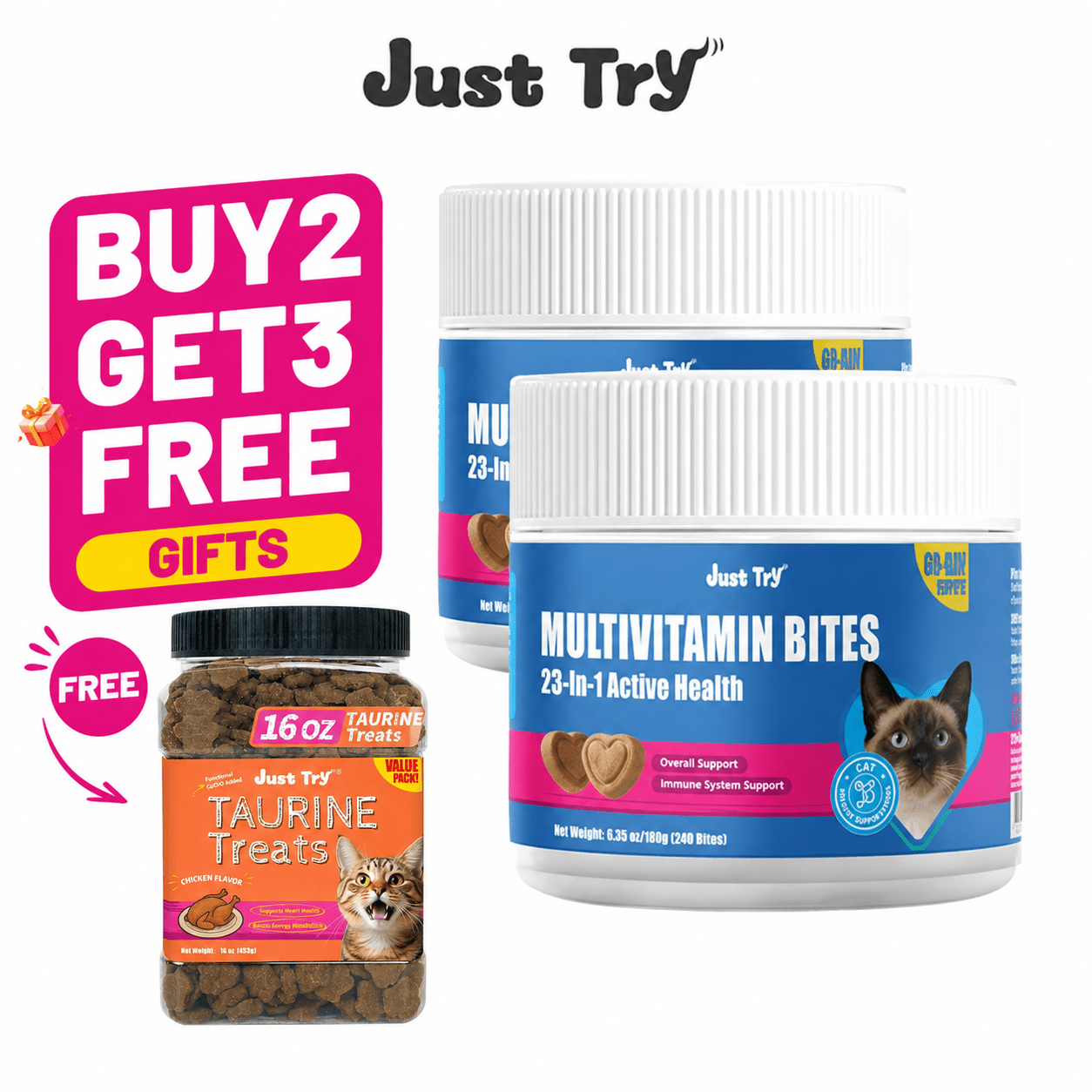
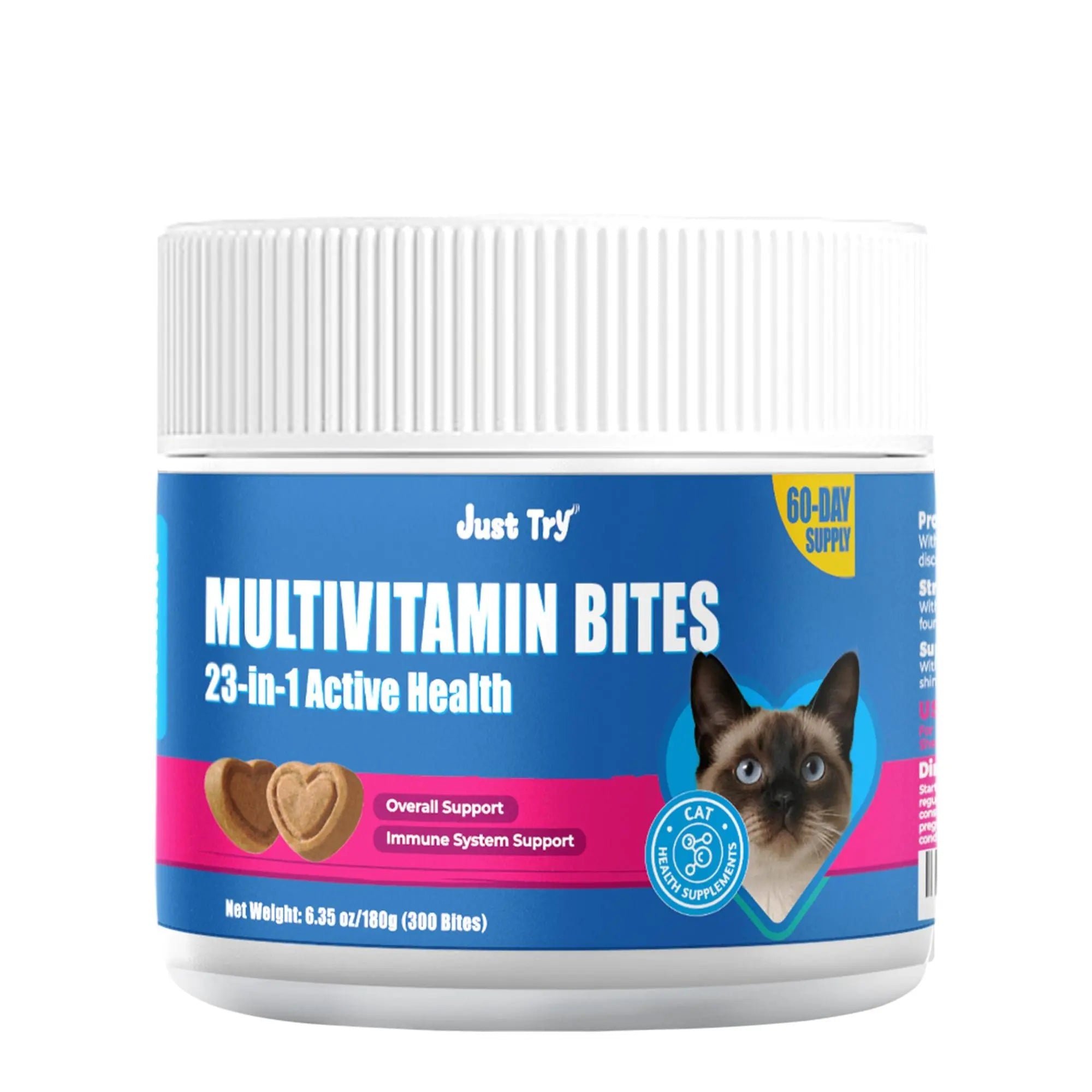
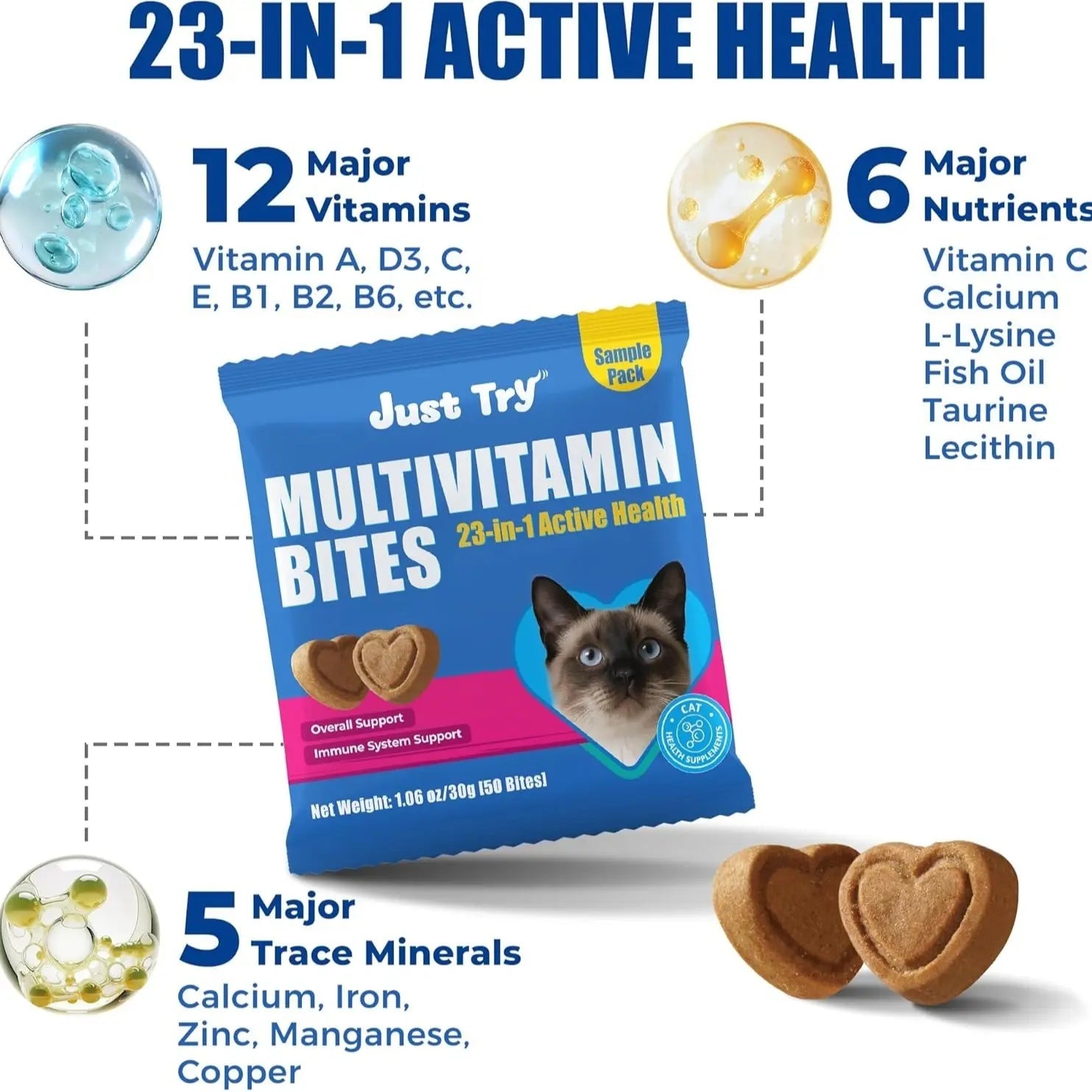
The current Just Try Cat Multivitamin Bites formula lists 60 mg of fish oil per 5 chews, together with taurine, L-lysine, biotin, zinc and multiple vitamins.
That makes the product a broader multinutrient chew containing fish oil, rather than a concentrated standalone EPA/DHA supplement.
How to Choose an Omega-3 Cat Treat
Check the Source
Look for clearly identified marine ingredients such as fish oil or salmon oil.
Check Whether EPA and DHA Are Listed
This is especially important if you are comparing the actual omega-3 concentration of several products.
Look at the Other Active Ingredients
A multivitamin bite may contain fish oil alongside taurine, lysine, vitamins and minerals, while a dedicated fish-oil supplement may contain little else.
Keep the Product's Role Clear
A treat or complementary supplement does not replace a complete and balanced diet.
Explore Just Try Cat Multivitamin Bites →
Frequently Asked Questions
Can cats take omega-3?
Omega-3 fatty acids are commonly included in feline diets and nutritional supplements. The appropriate source and amount depend on the overall diet and intended use.
Does all fish oil contain the same EPA and DHA?
No. EPA and DHA concentrations vary considerably among fish-oil products.
Are omega-3 cat treats the same as fish oil supplements?
No. Treats often combine fish oil with other nutritional ingredients and a treat base, while dedicated fish-oil supplements may be more concentrated.
Final Thoughts
Omega-3 cat treats make marine-based nutrition easier to incorporate into a daily routine, but “omega-3” should not be the end of your label reading.
Look at the source of the oil, whether EPA and DHA are quantified and what other nutrients the product provides. That gives you a much clearer picture of what you are actually feeding.
References
- Burron S, et al. The balance of n-6 and n-3 fatty acids in canine and feline nutrition. https://pubmed.ncbi.nlm.nih.gov/38776363/
- Park HJ, et al. Dietary fish oil and flaxseed oil suppress inflammation and immunity in cats. https://pubmed.ncbi.nlm.nih.gov/21440312/
- Corbee RJ, et al. Dietary long-chain omega-3 fatty acid supplementation in cats with osteoarthritis. https://pubmed.ncbi.nlm.nih.gov/22882740/
- Vendramini THA, et al. Exploring the efficacy and optimal dosages of omega-3 supplementation for companion animals. https://pubmed.ncbi.nlm.nih.gov/40495687/