Salmon oil has become one of the most recognizable ingredients in cat supplements, but pouring liquid fish oil over dinner is not the only way owners encounter it. Today, salmon and fish-oil ingredients also appear in convenient treats.
So how do salmon oil treats for cats compare with traditional liquid oil—and what should you actually look for on the label?
What Is Salmon Oil?
Salmon oil is a marine-source fat naturally associated with the long-chain omega-3 fatty acids EPA and DHA. These fatty acids become incorporated into cell membranes and can influence inflammatory signaling in the body.
Research in companion animals has examined EPA and DHA in areas including joints, skin, kidneys, cardiovascular health and other chronic conditions, although evidence and effective doses differ substantially by condition.[1]
What Does Salmon Oil Do for Cats?
Omega-3 fatty acids should not be treated as a single “cure-all” ingredient. Their effects depend on the type of fatty acid, amount supplied, the rest of the diet and the cat's individual nutritional needs.
Feline studies have shown that dietary fish oil can alter inflammatory responses,[2] while research in cats with naturally occurring osteoarthritis has reported changes in some mobility-related measures after long-chain omega-3 supplementation.[3]
That is different from saying every salmon-flavored treat produces the same effects. The nutritional value of a product depends on its actual formulation.
Salmon Oil Treats vs Liquid Fish Oil
| Feature | Salmon/Fish Oil Treat | Liquid Fish Oil |
|---|---|---|
| Feeding | Easy to offer as a reward | Usually measured and added to food |
| Taste | Combined with treat ingredients | Concentrated oily flavor |
| EPA/DHA information | Varies by product | Often quantified on dedicated supplements |
| Convenience | High | Requires measuring and storage |

Fish Oil Is Not the Same Number as EPA + DHA
This is one of the most important points when comparing omega-3 products.
A label might state that a product contains a certain amount of fish oil, but fish oil itself contains multiple fatty acids. Therefore, 100 mg of fish oil does not automatically mean 100 mg of EPA and DHA.
If you are specifically comparing products according to omega-3 concentration, look for separate EPA and DHA values whenever they are available.
What Else Can Be Included in Salmon Treats?
Salmon treats are often designed as multi-ingredient snacks rather than concentrated omega-3 supplements.
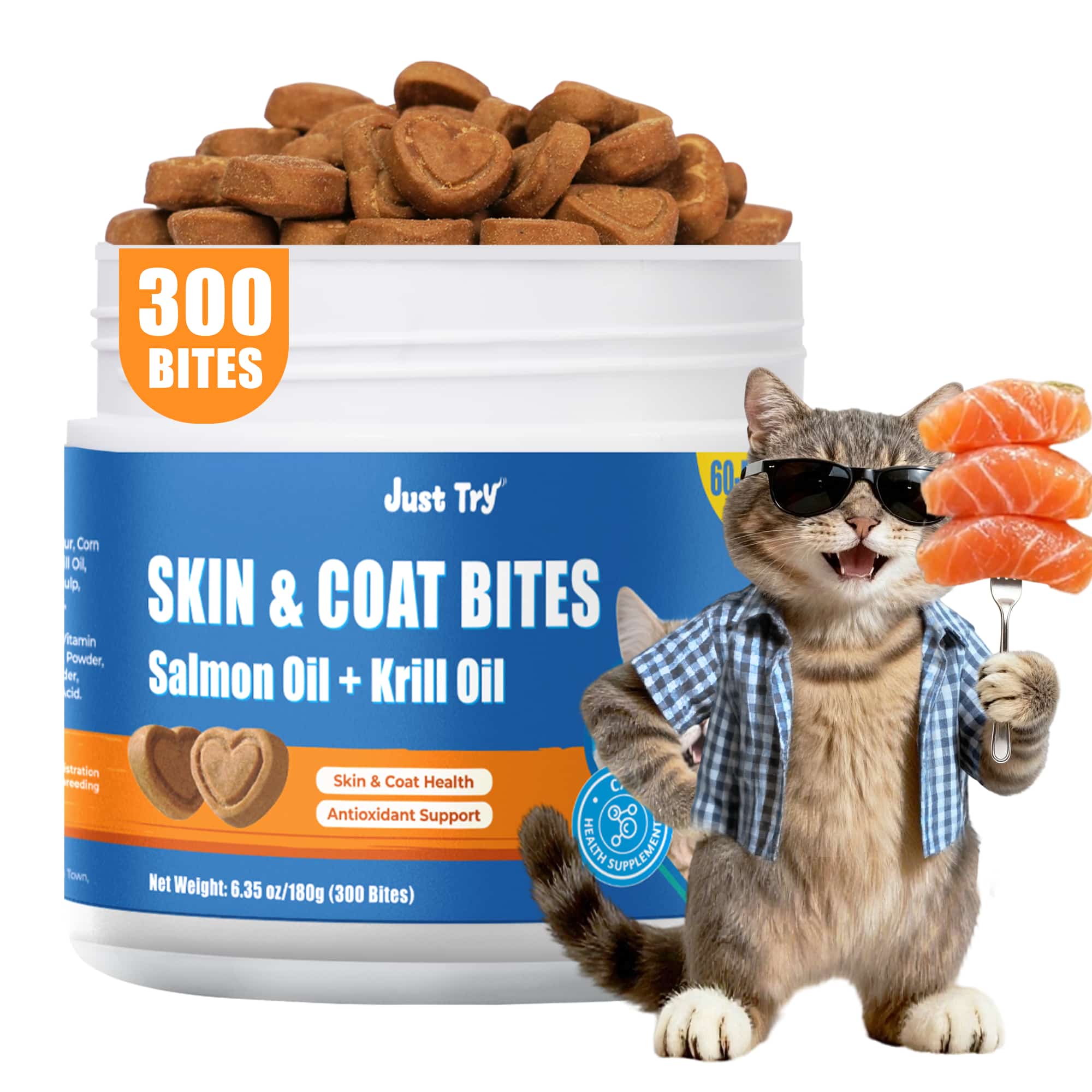
For example, the current Just Try Salmon Oil Cat Treats product page lists ingredients including salmon, barley seedling powder (cat grass), chicken liver, catnip powder and Vitamins C and E.
This makes the product better understood as a functional treat format rather than a precise pharmaceutical-style source of EPA/DHA.
What Should You Look for When Choosing Salmon Oil Treats?
1. Read Beyond the Front Label
Check the ingredient panel and nutritional information rather than relying only on phrases such as “omega-3” or “salmon oil.”
2. Know Whether You Want a Treat or a Concentrated Supplement
If your main goal is an enjoyable everyday reward containing salmon and complementary ingredients, a treat can be convenient. If you are trying to achieve a specific EPA/DHA intake, quantified fatty-acid information becomes more important.
3. Consider the Whole Diet
Omega-3 intake does not exist in isolation. The total fat profile, calorie intake and complete diet should still be considered.
4. Make Palatability Practical
A product that is easy to feed consistently may be more convenient than an oil a cat refuses once it is mixed into dinner.
Why Treat-Based Formats Are Popular
For many households, the real advantage is convenience. There is no pump to measure, no oily bottle to handle and no need to coat an entire meal.
A crunchy salmon treat also serves two roles at once: it can become part of bonding or reward time while adding ingredients associated with broader nutritional support.
Explore Just Try Salmon Oil Cat Treats →
Frequently Asked Questions
Is salmon oil the same as omega-3?
No. Salmon oil is a source of fat that can contain omega-3 fatty acids, including EPA and DHA. The actual concentration varies.
Are salmon oil treats better than liquid oil?
Neither format is automatically better. Treats emphasize convenience and palatability, while concentrated liquids may provide clearer EPA/DHA dosing information.
Can salmon treats replace a balanced cat diet?
No. Functional treats are complementary products and should remain part of an overall balanced feeding plan.
Final Thoughts
Salmon oil treats for cats can be a convenient way to combine treat time with marine-based ingredients, but the smartest comparison comes from reading the actual formulation.
When EPA and DHA amounts matter, look for quantified values. When convenience and daily enjoyment matter more, a salmon-based functional treat may provide a much easier feeding experience.
References
- Vendramini THA, et al. Exploring the efficacy and optimal dosages of omega-3 supplementation for companion animals. Nutrition Research Reviews. https://pubmed.ncbi.nlm.nih.gov/40495687/
- Park HJ, et al. Dietary fish oil and flaxseed oil suppress inflammation and immunity in cats. https://pubmed.ncbi.nlm.nih.gov/21440312/
- Corbee RJ, et al. Effect of dietary long-chain omega-3 fatty acid supplementation on osteoarthritis in cats. https://pubmed.ncbi.nlm.nih.gov/22882740/