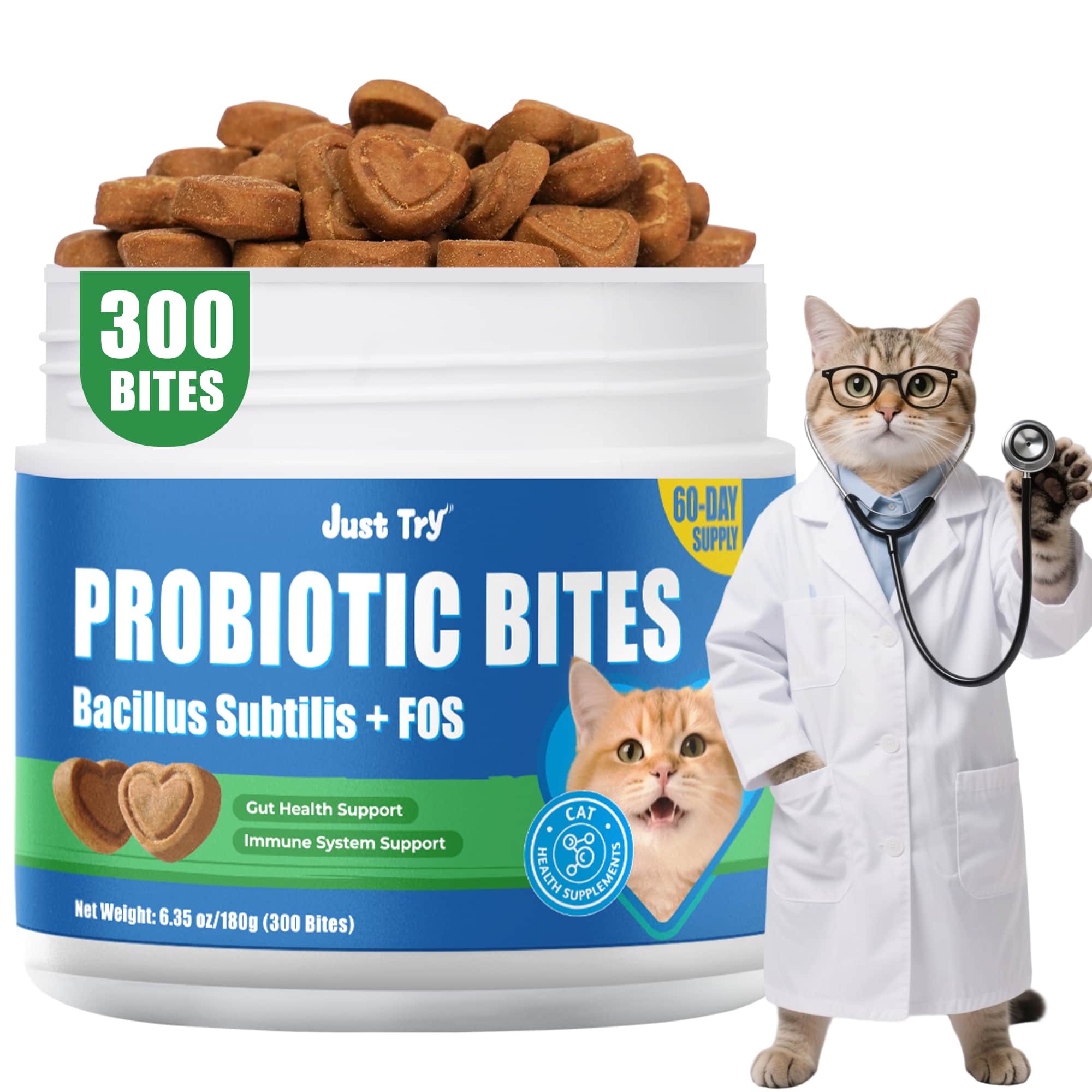
Walk through a pet supplement aisle and it can seem as though every cat should be taking a daily multivitamin. But feline nutrition is more complicated than simply adding more vitamins.
Cats have several unique nutrient requirements, yet a properly formulated complete and balanced diet is already designed to provide those essential nutrients. So where do multivitamin bites for cats fit?
Why Do Cats Have Unique Nutritional Requirements?
Cats are obligate carnivores with several metabolic adaptations that make their nutritional needs different from those of humans and many other animals.
Classic feline nutrition research describes cats' dietary dependence on nutrients including preformed vitamin A, taurine and arachidonic acid, together with comparatively high requirements for several amino acids and B vitamins.[1]
That is why “human food plus a vitamin” is not equivalent to a properly formulated cat diet.
What Vitamins and Nutrients Do Cats Need?
| Nutrient | General Nutritional Role |
|---|---|
| Vitamin A | Vision, epithelial tissues and normal physiological function |
| Vitamin D | Calcium and phosphorus metabolism |
| B vitamins | Numerous metabolic and enzyme functions |
| Vitamin E | Antioxidant protection of cell membranes |
| Taurine | Essential feline nutrient involved in normal heart, vision and other functions |
| Minerals | Structural, enzymatic and metabolic functions |
Do Cats Need a Multivitamin Every Day?

Not necessarily.
Veterinary nutrition guidelines emphasize evaluating whether the primary food is nutritionally complete and balanced for the appropriate life stage.[2] When that is the case, the diet is already formulated to supply essential vitamins and minerals.
Older veterinary nutrition literature similarly cautions that indiscriminate supplementation of an already balanced diet is not automatically beneficial.[3]
This does not mean all supplements are pointless. It means they should have a clear role in the overall feeding plan.
Complete Diet vs Multivitamin Supplement
| Product Type | Main Role | Can It Replace Main Food? |
|---|---|---|
| Complete & balanced cat food | Primary daily nutrition | Yes, when appropriate for life stage |
| Cat multivitamin bite | Complementary nutrients | No |
| Single-nutrient supplement | Specific nutritional purpose | No |
| Human multivitamin | Formulated for human requirements | Not appropriate as a feline diet substitute |
Why More Vitamins Are Not Always Better
Vitamin requirements have ranges. Fat-soluble vitamins such as Vitamins A and D can accumulate in the body, so adding supplements without considering the existing diet is not the same as simply adding “extra nutrition.”
Veterinary references document that excessive intakes of certain vitamins can create nutritional imbalances, which is why supplements should be used according to their intended formulation and feeding instructions.[4]
What Should You Look for in Cat Multivitamin Bites?
1. A Cat-Specific Formula
Cats have species-specific nutrient requirements. Choose products formulated specifically for feline use rather than repurposing human supplements.
2. Clearly Listed Active Ingredients
A useful supplement label should tell you which vitamins, minerals and complementary nutrients are actually included.
3. Amounts per Serving
Ingredient names alone are less informative than amounts. Check how many chews constitute one serving and how much of each active ingredient that serving provides.
4. A Practical Feeding Format
Soft or chewable bites can make supplementation easier than powders or liquids for households where cats readily accept treat-style products.
What Is in Just Try Cat Multivitamin Bites?
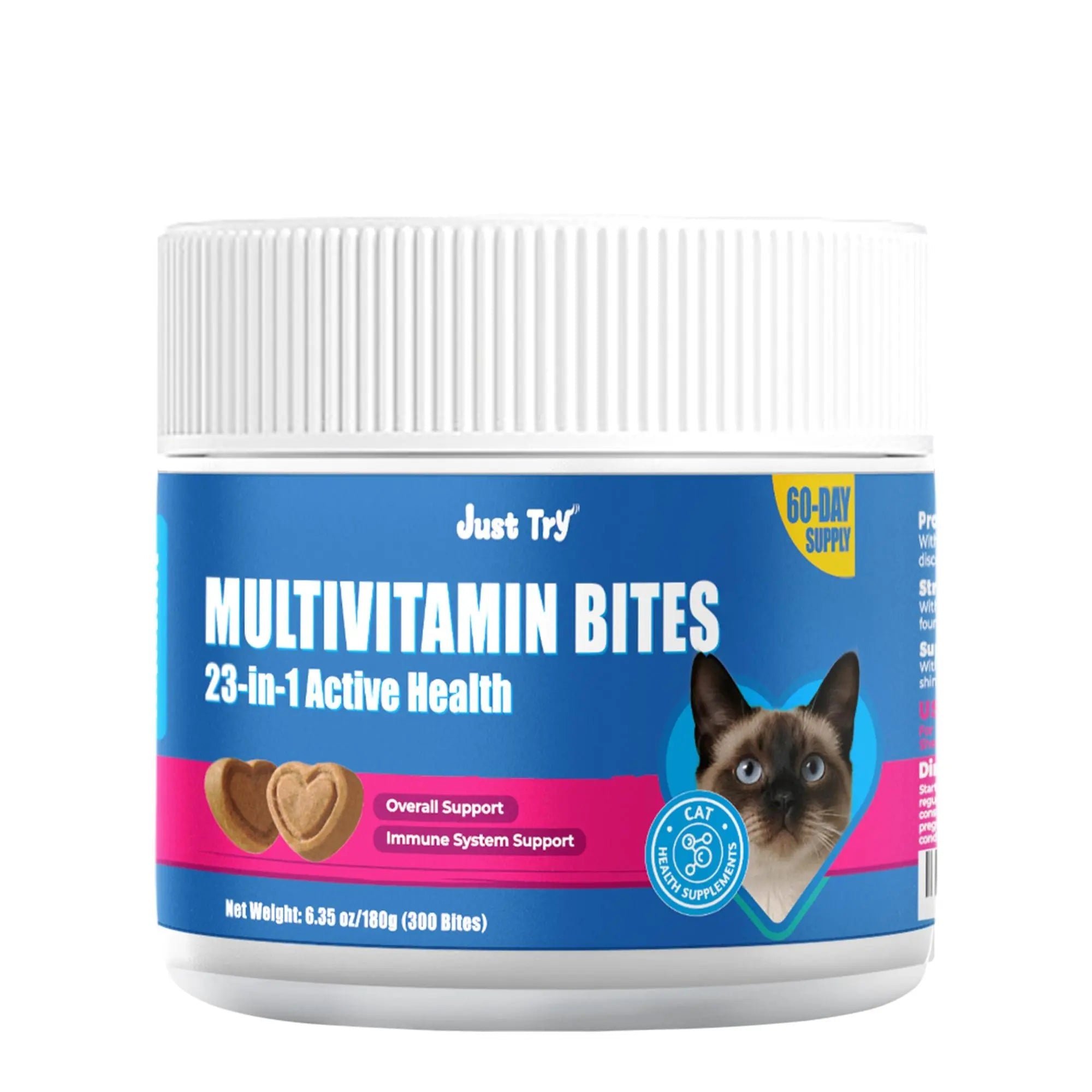
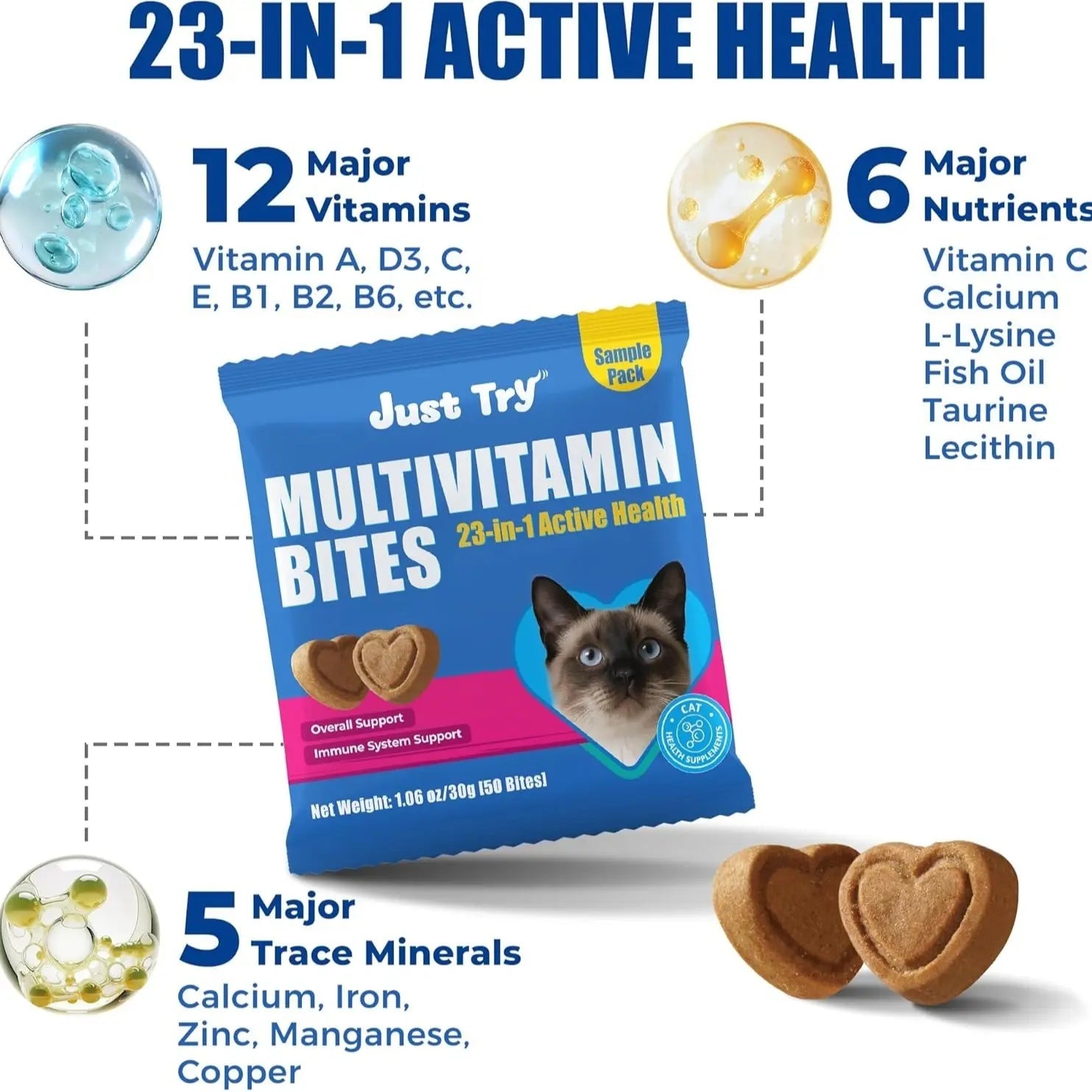
The current Just Try Cat Multivitamin Bites formula lists a range of vitamins and complementary nutrients per five chews, including:
- Vitamin A
- Vitamin D3
- Vitamins B1, B2 and B6
- Vitamin C and Vitamin E
- Biotin
- Zinc and other minerals
- Fish oil
- Taurine
- L-Lysine
- Lecithin
- Sodium hyaluronate
Rather than functioning as a replacement diet, this type of product is best understood as a multi-ingredient complementary chew.
Explore Just Try Cat Multivitamin Bites →
Frequently Asked Questions
Do indoor cats need vitamins?
Indoor living by itself does not automatically create a need for a multivitamin. The first question is whether the main diet is complete, balanced and appropriate for the cat's life stage.
Can cats take human multivitamins?
Human products are formulated around human nutritional requirements and should not be treated as substitutes for feline-specific foods or supplements.
Is taurine a vitamin?
No. Taurine is an amino-sulfonic acid and an essential dietary nutrient for cats, but it is not classified as a vitamin.
Are multivitamin bites the same as treats?
They may use a treat-like format, but their role is different. Always follow the product's serving instructions rather than feeding them freely like ordinary snacks.
Final Thoughts
Cats absolutely need vitamins—but that does not mean every cat needs an additional daily multivitamin.
The strongest nutritional foundation remains an appropriate complete and balanced diet. When complementary supplements are used, look for cat-specific formulas, clearly stated ingredients and transparent serving information.
That approach is more useful than simply looking for the product with the longest ingredient list.
References
- MacDonald ML, Rogers QR, Morris JG. Nutrition of the domestic cat, a mammalian carnivore. Annual Review of Nutrition. https://pubmed.ncbi.nlm.nih.gov/6380542/
- World Small Animal Veterinary Association. Global Nutrition Guidelines. https://wsava.org/global-guidelines/global-nutrition-guidelines/
- Kallfelz FA, Dzanis DA. Overnutrition: an epidemic problem in pet animal practice? Veterinary Clinics of North America: Small Animal Practice. https://pubmed.ncbi.nlm.nih.gov/2658284/
- Merck Veterinary Manual. Nutritional Requirements of Small Animals. https://www.merckvetmanual.com/management-and-nutrition/nutrition-small-animals/nutritional-requirements-of-small-animals