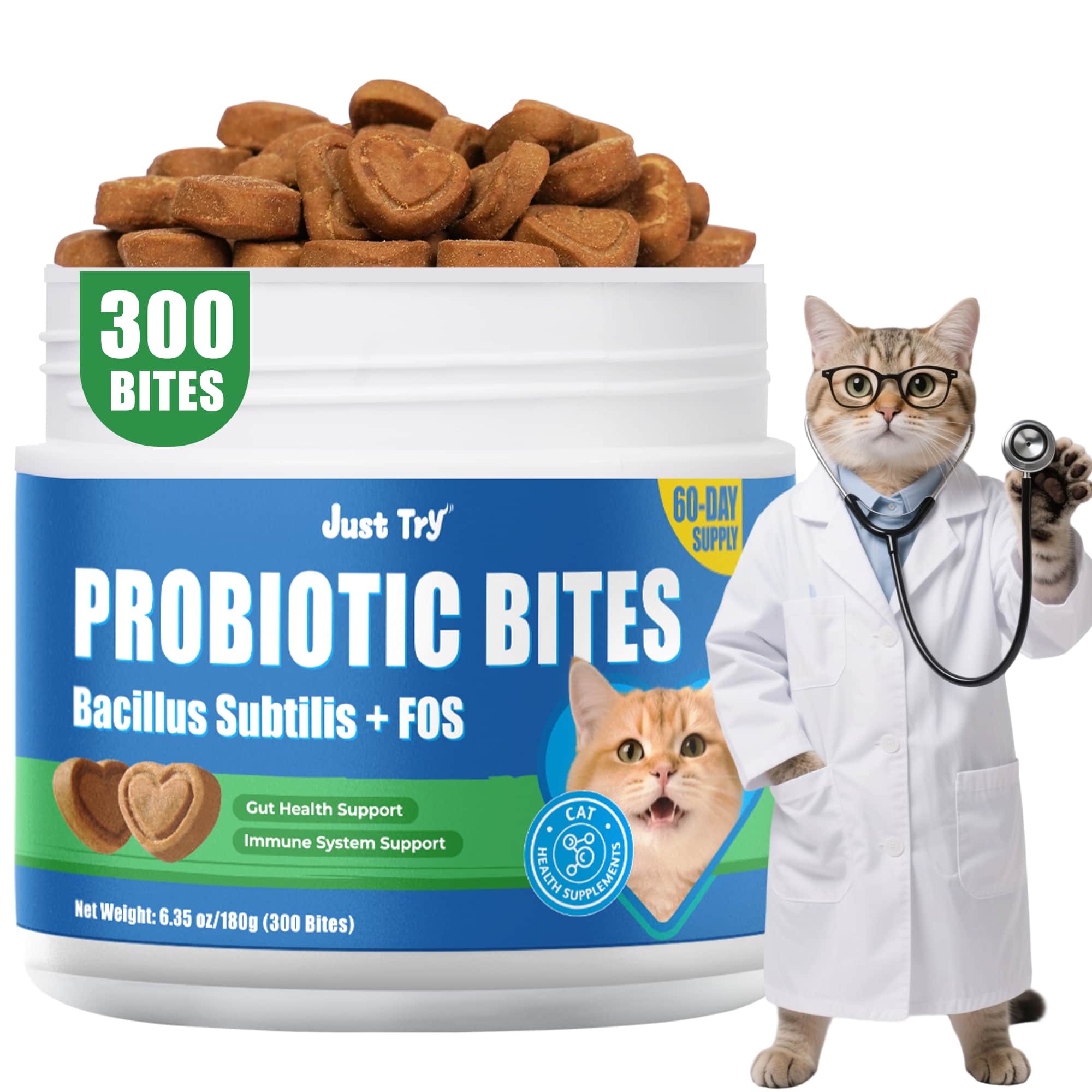
You open the treat bag.
Your cat hears it from two rooms away.
Five seconds later, there is suddenly a very interested little face staring at you as if dinner has not been served in weeks.
Sound familiar?
Cat treats are one of the easiest ways to reward good behavior, make grooming less dramatic, encourage play, or simply give your cat something they enjoy. The tricky part is knowing when a few treats quietly turn into a few too many.
So, how many treats can a cat have a day?
There is no single number that works for every cat. A tiny crunchy biscuit, a freeze-dried chicken cube, and a lickable treat can contain very different amounts of calories.
A better approach is to look at the size of the treat, the feeding instructions, and how those treats fit into the rest of your cat's daily diet.
Key Takeaways
- Treats should stay a small part of your cat's overall daily food intake.
- The number of treats matters less than the total calories they provide.
- Larger or calorie-dense treats usually need smaller portions.
- Treats can be useful for training, bonding, enrichment, and occasional snacking.
- Your cat should still be interested in their normal meals.
- Always check the feeding directions on the specific treat you are using.

So, How Many Cat Treats Per Day Is Too Many?
This is where things get a little confusing.
One brand might make a tiny crunchy treat that weighs almost nothing. Another might sell a large freeze-dried piece made mostly from meat. Both count as "one treat," but they are obviously not nutritionally identical.
That is why counting pieces alone does not tell you very much.
A common feeding guideline is to keep treats to roughly 10% or less of your cat's total daily calories, with the remaining calories coming from complete and balanced food.
Think of treats the same way you might think about dessert.
A little dessert after dinner? Fine.
Dessert replacing half of dinner? Probably not the plan.
Why the Number on the Treat Bag Is Only a Starting Point
Most packaged cat treats include feeding recommendations.
They are useful, but they should not be treated as a challenge.
If the package says "up to 10 treats per day," your cat does not automatically need ten.
The right amount can depend on:
- Body size
- Age
- Activity level
- Main food intake
- Treat size
- Calories per treat
- Whether you use treats for training
- Whether your cat receives other snacks during the day
And yes, every member of the household counts.
If three people each think, "I only gave her a few," the treat jar can disappear surprisingly fast.

Cat Treats Are Not All the Same
Walk through any pet aisle and "cat treats" can mean almost anything.
You will see crunchy biscuits, freeze-dried meat, soft chews, lickable tubes, functional bites, dental snacks, cat grass treats, and plenty more.
Here is a simple way to think about them:
| Treat Type | Common Use | Portion Control |
|---|---|---|
| Crunchy cat treats | Daily rewards and training | Usually easy |
| Freeze-dried treats | High-value rewards | Pieces may vary in size |
| Lickable treats | Bonding or food topping | Portion by tube or pouch |
| Functional bites | Supplemental daily routine | Follow product directions |
| Cat grass treats | Crunchy reward and variety | Follow product directions |
This is why asking "How many treats can I give my cat?" is only half of the question.
The other half is:
What kind of treat are you giving?
Can Cats Have Treats Every Day?
For many cats, yes.
A small amount of treats can fit into a normal daily routine as long as the treats do not crowd out the main diet.
In fact, giving treats with a purpose can be more useful than randomly handing them out throughout the day.
You might use them:
- After brushing
- During nail trimming
- For carrier training
- After playtime
- As part of a food puzzle
- To reward coming when called
- As an occasional afternoon snack
Your cat still gets the fun of treat time, but you also know where those treats are going.
That can make portions much easier to manage.
The "Treat Creep" Problem
This happens in a lot of homes.
Monday starts with three treats.
By Friday, your cat has learned that sitting beside the cabinet leads to snacks.
Then meowing beside the cabinet leads to snacks.
Then looking vaguely in the direction of the cabinet somehow leads to snacks.
Cats are excellent trainers.
Unfortunately, sometimes we are the ones being trained.
If you feel like treat portions are slowly growing, decide on the day's amount ahead of time.
Put the daily portion in a small container in the morning. Once that container is empty, treat time is finished until tomorrow.
Simple.
And much easier than trying to remember who gave what.
Signs Your Cat May Be Getting Too Many Treats
The treat bag does not have to be empty for treats to start interfering with the normal routine.
Here are a few things worth watching.
Your Cat Starts Ignoring Regular Meals
If your cat suddenly becomes much more interested in snacks than dinner, the treats may simply be more exciting.
Cutting back can help make normal meals interesting again.
Treat Portions Keep Getting Larger
One becomes two.
Two becomes five.
Eventually nobody remembers what the original serving looked like.
This is particularly easy to do with very small treats.
Everyone in the House Gives Treats
One cat. Four humans. Four separate snack sessions.
A household treat jar or daily portion container solves this problem quickly.
Treats Become the Default Response to Meowing
Sometimes your cat wants food.
Sometimes they want play.
Sometimes they want the door opened.
And sometimes they seem to want to complain about absolutely nothing.
Not every meow requires a snack.
What Makes a Good Cat Treat?
Healthy cat treats are something many cat parents search for because they want a snack their cat enjoys without turning every reward into junk food time.
There is no single ingredient that automatically makes one treat perfect, but there are several things worth checking.
1. Clear Feeding Instructions
You should be able to tell how the product is meant to be fed.
More importantly, you should know whether it is a treat or a complete food.
Those are not the same thing.
2. A Format Your Cat Actually Likes
Some cats love crunchy treats.
Others will only show up for a lickable snack.
Some will do almost anything for freeze-dried chicken.
The "best" treat is not particularly useful if your cat walks away from it.
3. An Appropriate Portion Size
Smaller treats are often easier to use for repeated training rewards because you can give several without handing over one huge snack every time.
4. Ingredients That Fit the Purpose
Some treats are simply rewards.
Others include ingredients such as meat, fish, cat grass, pumpkin, or selected functional ingredients.
Neither approach is automatically better.
The important part is knowing what you are buying and why you are feeding it.
Are Crunchy Cat Treats Good for Training?
They can be very convenient.
Small crunchy treats are easy to carry, easy to portion, and quick for a cat to eat between repetitions.
Imagine teaching your cat to enter a carrier voluntarily.
You probably do not want to stop after every successful step and wait while they spend two minutes eating an enormous snack.
Small rewards keep the session moving.
This is also why tiny cat snacks can sometimes be more practical than larger pieces when you are working on:
- Carrier training
- Recall
- Grooming tolerance
- Nail trimming
- New routines
- Food puzzles
The trick is to remember that several small rewards still add up.
Should You Break Cat Treats Into Smaller Pieces?
Absolutely, if the texture allows it.
A cat usually cares much more about receiving the reward than whether that reward arrived as one whole piece or two smaller ones.
Breaking treats into smaller pieces can be especially useful during training because you can reward behavior more frequently without dramatically increasing the total amount fed.
It also gives you more mileage out of the treat bag.
Your cat does not need to know that part.
What About Cat Grass Treats?
Fresh cat grass is popular with some cats, but plenty of others seem completely unimpressed by a pot of grass sitting in the living room.
That is one reason cat grass treats exist.
They put cat grass into a familiar snack format instead of asking your cat to become a tiny lawn mower.
For cats that already enjoy crunchy rewards, this can be an easy way to add variety to treat time.
Just Try Cat Grass Treats combine barley seedling powder with salmon, chicken liver, and natural catnip flavor in a crunchy bite-sized format.
They may be especially convenient for cats that:
- Ignore fresh cat grass
- Prefer crunchy snacks
- Enjoy salmon or catnip flavors
- Respond well to food rewards
- Live in homes where growing fresh grass is inconvenient
Because they are treats, they should still be served as part of the daily treat allowance rather than replacing normal meals.

Looking for a Crunchy Cat Grass Treat?
Explore Just Try Cat Grass Treats made with barley seedling powder, salmon, chicken liver, and natural catnip flavor.
Explore Cat Grass Treats
How to Make Treat Time More Interesting Without Giving More Food
This is one of the easiest changes you can make.
Instead of increasing the number of treats, increase the experience around them.
Try hiding several pieces around the room and letting your cat search for them.
Put a few into a puzzle toy.
Use them during a short training session.
Toss one across the floor and let your cat chase it.
Ask for a simple behavior before giving the reward.
Same treats. Much more entertainment.
For indoor cats especially, turning food into a small activity can make snack time last longer without automatically making the serving larger.
What About Kittens?
Kittens are growing quickly, so their regular food matters a lot.
Treats can still be used for bonding and early training, but they should stay a small extra rather than becoming a major part of the diet.
Always check whether the particular product is labeled appropriately for your kitten's age.
This is also a great time to build good habits.
If your kitten learns early that treats come during training, grooming, or other useful activities, snack time can become part of a routine instead of something they demand every time you walk toward the kitchen.
Do Treats Need to Be "Healthy"?
The word "healthy" gets used a lot.
Sometimes so much that it stops meaning anything.
Instead of choosing a package only because the front says "healthy," look at the actual product.
Ask:
- What is it made from?
- How large is one serving?
- How does it fit into the rest of the diet?
- Is it meant to be an occasional snack or something used every day?
- Will my cat actually eat it?
Those questions are usually much more useful than the marketing word on the front of the bag.
A Simple Daily Treat Routine
If you constantly wonder whether you are giving too many treats, make the process boringly simple.
Step 1: Decide how much you plan to give.
Step 2: Put that amount in a separate container.
Step 3: Use treats from that container for training, play, grooming, or snacks.
Step 4: When it is empty, you are done for the day.
This works especially well in multi-person households.
Everyone can see exactly how many treats are left.
No spreadsheets required.
Frequently Asked Questions
How Many Treats Can a Cat Have a Day?
There is no universal number because treat sizes and calories vary. Use the product's feeding instructions and keep treats as a relatively small part of the overall daily diet.
Can Cats Have Treats Every Day?
Many cats can enjoy a small amount of treats every day as long as their normal complete food still makes up the majority of their diet.
How Many Treats Are Too Many for a Cat?
If treats are replacing normal food, causing portions to grow significantly, or making your cat less interested in regular meals, it is probably time to reduce them.
Are Cat Snacks the Same as Cat Food?
Not necessarily. Most treats and snacks are designed to supplement the normal diet rather than provide complete daily nutrition. Always check the product label.
Can I Use Cat Treats for Training?
Yes. Small treats are particularly useful for training because they can be given quickly as rewards.
Can I Break Treats Into Smaller Pieces?
Usually, yes. If the treat can be divided safely, smaller pieces can make portion control easier during training.
Are Cat Grass Treats Meant to Replace Fresh Cat Grass?
They are a different feeding format. Some cats enjoy fresh grass, while others prefer crunchy snacks. The better option depends largely on what your cat will actually eat and how you plan to use it.
Final Takeaway
There is no magic number of treats that works for every cat.
And that is actually good news.
You do not need to obsess over whether five treats are perfect and six are suddenly terrible.
Pay attention to the bigger picture instead.
Keep treats small compared with regular meals. Check serving instructions. Remember that different types of cat treats contain different amounts of food and calories. And use them for things that make life a little more fun — training, play, grooming, bonding, or the occasional "you were very cute just now" reward.
Because yes, sometimes that last one is unavoidable.