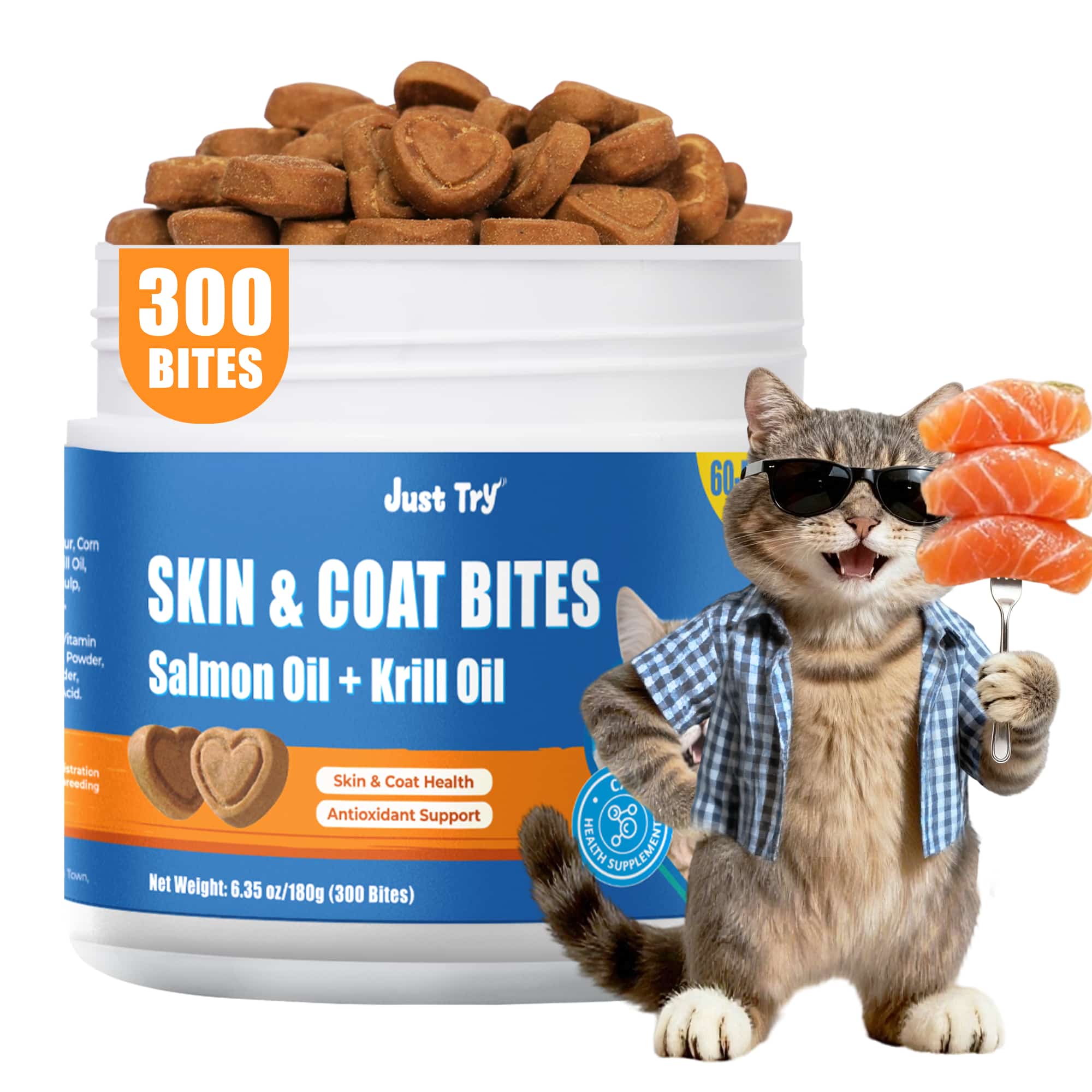
Put a piece of salmon near some cats and suddenly you have their full attention.
That makes the idea of salmon oil seem fairly straightforward. Cats eat fish, salmon oil comes from fish, so it should be fine — right?
The answer is generally yes, but the important part is not simply can cats have salmon oil. It is how salmon oil fits into the rest of the diet.
Quick Answer
Cats can consume salmon oil when it is used appropriately in cat food or a properly formulated pet product. Salmon oil can provide marine omega-3 fatty acids such as EPA and DHA, but concentration varies widely between products. Follow the specific feeding directions rather than guessing amounts based on spoon size or another brand's instructions.
Why Do Cat Parents Give Salmon Oil?

Most of the interest comes back to omega-3 fatty acids.
Marine fish oils can provide EPA and DHA, long-chain omega-3 fatty acids used in companion-animal nutrition.
They have been researched for several roles, including skin and inflammatory responses and mobility in cats.
But "contains omega-3" does not tell you everything you need to know.
Concentration matters.
Not All Salmon Oil Products Are the Same
This is probably the most important part of the entire subject.
One teaspoon of Product A does not necessarily contain the same amount of EPA and DHA as one teaspoon of Product B.
That is why copying a serving recommendation from an online forum, a different brand, or a human supplement can be misleading.
Look at the feeding directions for the exact product you are using.
How to Add Salmon Oil to a Cat's Routine
Start With the Existing Diet
Before adding anything new, look at what your cat already eats.
Complete cat foods may already include fish oils, marine ingredients, or other sources of fatty acids.
An additional supplement is still additional nutrition — including additional calories and fat.
Follow the Product's Own Feeding Guidance
Do not assume that all oils use the same serving size.
A concentrated supplement and a food product containing salmon-derived ingredients are completely different feeding formats.
Introduce New Foods Gradually
Cats can be remarkably suspicious of sudden changes to a familiar bowl.
If you are adding a new product to food, introduce it gradually according to its directions rather than dramatically changing the meal overnight.
This also gives you a chance to see whether the flavor and texture actually work for your cat.
Remember the Calories
Oil is calorie-dense.
That matters when extras are being added on top of a complete diet, particularly when a cat also receives treats throughout the day.
Small extras have a habit of becoming less small when they appear at breakfast, after lunch, during training, and again because the cat looked convincing at 9 p.m.
Can Kittens Have Salmon Oil?
Kittens have different nutritional needs from adult cats because they are growing rapidly.
Rather than improvising with a human fish-oil capsule or an arbitrary amount of liquid oil, use food and products formulated appropriately for the kitten's life stage and follow the specific feeding directions.
Growth is not the ideal time to experiment with random nutrient quantities.
Can Cats Take Omega-3?
Omega-3 fatty acids are already used in feline nutrition.
The question is not whether cats can consume omega-3 at all, but what source, amount, and overall diet are involved.
Salmon oil is one possible marine source. Other fish oils and specially formulated foods can also provide omega-3 fatty acids.
Liquid Salmon Oil vs. Salmon Treats

There is more than one way to bring salmon-focused ingredients into a cat's routine.
Liquid oil can be mixed directly with food, but it requires careful portioning and some cats dislike the change in smell or texture.
Salmon-focused treats are easier to portion as rewards and may fit more naturally into treat time, although they remain complementary foods rather than concentrated oil supplements.
Complete foods containing marine ingredients build those nutrients directly into the normal meal.
There is no single format that is automatically best for every household.
Rather Keep It Simple at Treat Time?
Explore JustTry's crunchy salmon-focused cat treats for an easy reward format with salmon, cat grass and chicken liver.
Shop Salmon Oil Cat TreatsCommon Mistakes to Avoid
Using Human Supplement Directions
Human products may use different concentrations, serving sizes, and additional ingredients. Do not assume that a human serving translates directly to a cat.
Adding Multiple Omega-3 Products Without Checking
If the normal food, treats, topper, and supplement all contain added oils, the total matters more than any single label.
Assuming More Means Better
Nutrients still have appropriate ranges. Adding more of a beneficial ingredient does not automatically create a better diet.
Frequently Asked Questions
Can cats have salmon oil every day?
Some cat foods and pet products are designed for regular use, but frequency and serving amount depend on the specific formulation. Follow the product's feeding directions.
Can kittens have salmon oil?
Omega-3 fatty acids can be part of kitten nutrition, but growing kittens have specific nutritional requirements. Use products appropriate for their life stage rather than estimating a dose from an adult or human product.
Can cats take human omega-3 capsules?
Human supplements can differ in concentration and additional ingredients, so they should not be treated as interchangeable with a cat-specific feeding product.
Can I put salmon oil directly on cat food?
Products designed as liquid food supplements are commonly mixed with food, but the correct amount depends on the exact product. Follow its label directions rather than using a general spoon measurement.
Is a salmon treat the same as salmon oil?
No. A salmon-containing treat is a complementary food, while salmon oil is a concentrated oil ingredient. Their nutrient concentrations and intended serving sizes can be very different.
Final Thoughts
Cats can have salmon oil, but that simple answer leaves out the part that matters most: quantity and context.
A cat eating a complete diet does not automatically need every beneficial nutrient added again as a supplement.
Choose the format that makes sense, check the actual product, follow its feeding guidance, and remember that the goal is a balanced routine — not the longest possible list of supplements beside the food bowl.
Sources & Further Reading
Merck Veterinary Manual — Nutritional Requirements of Small Animals