Salmon oil has found its way into everything from pet-food toppers to treats and supplements.
That popularity naturally raises a question: is salmon oil good for cats, or is it simply another ingredient that sounds impressive on the front of a package?
The useful answer sits somewhere in the middle.
Quick Answer
Salmon oil is a marine source of omega-3 fatty acids, including EPA and DHA. These fatty acids are used in feline nutrition and have been studied for several functions, including skin and inflammatory responses. However, benefits depend on the actual formulation, amount consumed, and the rest of the cat's diet. More is not automatically better.
What Is Salmon Oil?

Salmon oil is an oil obtained from salmon and belongs to the broader category of marine fish oils.
One reason fish oils receive so much attention in nutrition is that they can provide the long-chain omega-3 fatty acids EPA and DHA.
Those names often appear on supplement labels, but they are more useful than the simple phrase "contains omega-3."
Different oils can contain very different amounts of EPA and DHA, which means two products labeled "salmon oil" may not provide identical nutrition.
What Does Salmon Oil Do for Cats?
Omega-3 fatty acids participate in a range of normal biological processes.
Research in cats has also explored how marine omega-3 fatty acids influence inflammatory responses, skin health, and mobility.
That does not turn salmon oil into a treatment for every skin, coat, or joint concern. It simply means the fatty acids found in marine oils can play useful nutritional roles depending on the cat and diet.
Potential Benefits of Salmon Oil for Cats

1. Provides Marine Omega-3 Fatty Acids
The most straightforward benefit is nutritional.
Fish oils can provide EPA and DHA, two long-chain omega-3 fatty acids that are widely discussed in companion-animal nutrition.
2. May Support Healthy Skin and Coat
Fatty acids are important components of normal skin and coat nutrition.
Research in cats has found that dietary fish oil can influence skin inflammatory responses. That makes omega-3 fatty acids particularly interesting when discussing nutrition for coat and skin support.
However, a shiny coat still depends on much more than one ingredient. Protein intake, overall fat balance, grooming, health, and the complete diet all matter.
3. Omega-3s Are Involved in Inflammatory Pathways
EPA and DHA are often studied because they can influence the body's inflammatory signaling pathways.
This is one reason marine omega-3s appear in nutritional research involving several health areas.
4. They Have Been Studied in Feline Mobility
One controlled study involving cats with naturally occurring osteoarthritis found differences in several owner-observed mobility measures when cats consumed a fish-oil-enriched diet compared with a corn-oil diet.
This does not mean every healthy cat needs an omega-3 supplement for their joints. It simply shows why marine omega-3s remain an active area of feline nutrition research.
Does Every Cat Need Salmon Oil?
No.
A properly formulated complete diet may already provide the fatty acids a cat needs.
Adding another source simply because "omega-3 is healthy" is not always necessary.
The more useful questions are:
- What does the cat already eat?
- Does the product state how it should be fed?
- Is it a complete food, supplement, topper, or treat?
- How much additional fat and calories does it add?
- Does the cat actually enjoy the format?
Salmon Oil vs. Salmon-Flavored Products
This distinction is easy to miss.
A food containing salmon is not automatically the same thing as a concentrated salmon-oil supplement.
Likewise, a salmon-flavored treat does not automatically tell you how much EPA or DHA it provides.
If your goal is a specific omega-3 intake, check the actual product formulation and feeding information rather than relying only on the word "salmon."
What About Salmon Oil Treats?
Some cats are not enthusiastic about liquid oils drizzled over their usual food.
A treat format can be more convenient for cat parents who simply want a salmon-focused snack rather than another bottle on the kitchen counter.
The important distinction is that treats remain complementary foods. They should sit alongside the normal diet rather than replace a complete everyday meal.
Prefer a Crunchy Salmon-Focused Treat?
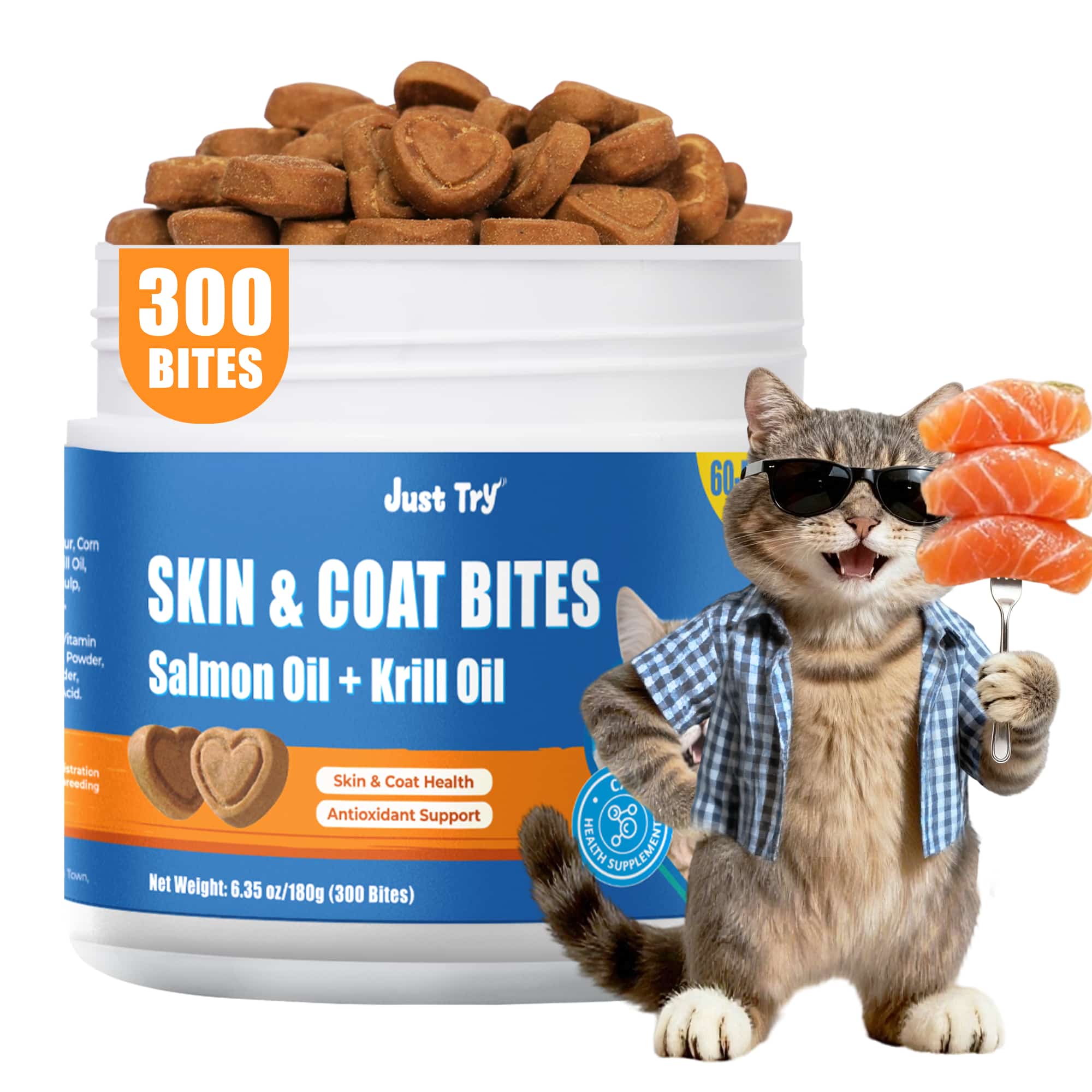
Explore JustTry Salmon Oil Cat Treats with salmon, cat grass, chicken liver and a crunchy reward-friendly format.
Explore Salmon Oil Cat TreatsFrequently Asked Questions
Is salmon oil good for cats?
Salmon oil can provide marine omega-3 fatty acids such as EPA and DHA. Whether adding it is useful depends on the cat's existing diet, the specific product, and how much is being consumed.
What does salmon oil do for cats?
Marine omega-3 fatty acids participate in normal nutritional and inflammatory processes and have been studied in cats for areas including skin responses and mobility.
Does salmon oil help a cat's coat?
Essential fatty acids are important to normal skin and coat nutrition. However, coat condition depends on the overall diet and health rather than one ingredient alone.
Is salmon oil the same as omega-3?
No. Salmon oil is an ingredient that can contain omega-3 fatty acids. The actual amount and proportions of EPA and DHA can vary between products.
Final Thoughts
So, is salmon oil good for cats?
It can be a useful source of marine omega-3 fatty acids, but that is not the same as saying every cat needs extra salmon oil.
Look at the whole diet first. Then look at the actual formulation, feeding instructions, calories, and format.
Nutrition works best when the ingredient has a clear purpose — not simply because it happens to be trending on the label.
Sources & Further Reading
Merck Veterinary Manual — Nutritional Requirements of Small Animals
PubMed — Dietary Fish Oil and Skin Inflammatory Responses in Cats